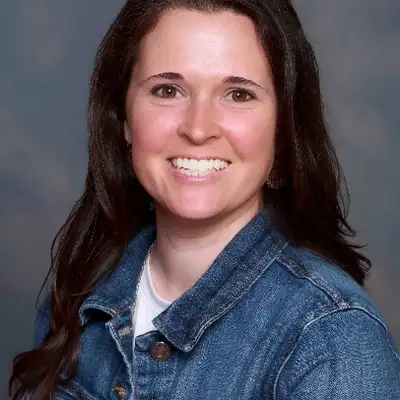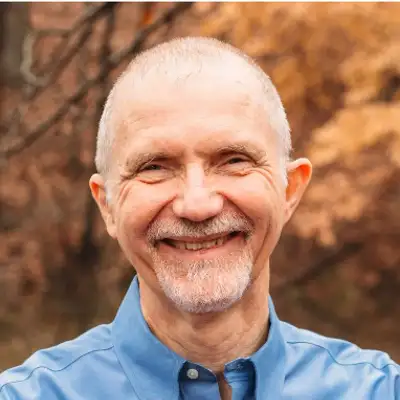
Nathan King: Our guest today is Larry Bolden. Larry founded Wellspring Group in 2003 after a 13-year career in financial consulting and 13 years of serving as a pastor of Dothan Christian Fellowship. He has an MA in Counseling from Philadelphia Biblical University. He has done postgraduate work in leadership coaching at Regent University and was president of Wellspring Performance Group, which was an executive coaching firm from 2004 to 2008. He and his wife Mary have a son and five grandchildren who occupy much of their hearts and time. I’m Nathan King, I am a longtime Wellspring facilitator and volunteer, and I’m also joined with my co-host, Mandi Wellington, who is the operations manager for Wellspring Group. She's on staff and has been for a number of years. Welcome both of you to the Wholehearted Way podcast. It's good to see you today.
Mandi Wellington: Thank you Nathan, it's good to be here.
Larry Bolden: Thank you Nathan. It's great to be here.
Nathan King: Larry I'd like to start out with a question for you. You are most known for developing and leading the retreat series for the Battle for the Heart, and the thousands of people who've gone through that. I’d like to start if we could go back in time, a little before the foundation of this, and ask you if you could tell us about your experience, I think around the 2002 timeframe with the LEAD program. How did that shape you?
Larry Bolden: So in 2002 I was coming to the end of 13 years of pastoral ministry at Dothan Christian Fellowship, in the small non-denominational church in the hometown that we had grown up in and come back to after college. And so the Lord had led us away from pastoral ministry. We were still there kind of transitioning and some friends suggested we go to LEAD—a leadership equipping and development at Dallas Seminary which is a week-long workshop. We had five leadership couples from different places, one counselor and two coaches. And so that experience really helped me define what my part of God’s larger story really is, helped me—the terminology they use is "what's the unique music God is singing through my life, what's unique message he's trying to tell through my life". And so through that process it became clear to me that my life was about experiencing the depth of God’s love and would be about guiding other people to experience the depth of God’s love. So that was incredibly helpful. At the same time they recommended that I get into a graduate school program in Christian counseling for my own development and because this type of work could be beneficially—it could be really beneficial to have that background. So that then led me into a grad school program which was very significant in shaping my life personally and the ministry of Wellspring Group.
Nathan King: And how, how was that significant to do grad work at that—and by the way, what was your age around that time?
Larry Bolden: So that was 2002, I was 49. I turned 50 in March of 2003. I took a short sabbatical between pastoral ministry and starting Wellspring in the fall of ‘03 and actually went to grad school—two summer intensives plus some weekend intensives. So it was a six-week residential program with about 12 students and the faculty of the counseling department. So that experience was really critical to discovering my whole heart I would say in the last 25 years. The most transformational elements of my life has been discovering my whole heart in the context of community. And so that summer in a very rigorous program that was heavily oriented toward—each morning we would do three hours of lectures, each afternoon we'd have about a three-hour lab and that would be 10 or 12 of us students depending on the course and a professor and an assistant. And we would really do very practical hands-on engaging work and not only growing in the skills of connecting and eventually counseling but really discovering our whole hearts. And so that’s where I began to enter into a realm of vulnerability and actual authenticity that I’d never been in before.
Nathan King: And so the vulnerability came out of this—these are my words, you tell me if I've picked it up correctly. You discovered that living from a whole heart happened in community. That's kind of what you picked up from the—yeah.
Larry Bolden: Well basically, the program there was heavily influenced by Larry Crabb’s work and Dan Allender's work and their concept of the whole heart really focusing in my terminology that our whole heart consists of deep desires placed within us in the image of God in us. And out of those deep desires flow feelings and then we have thoughts and ultimately we choose out of how we've processed our desires, feelings, and thoughts. That could be conscious or subconscious. So I discovered my whole heart. I'd never quite had terminology for that in really deep desires. So I discovered my whole heart, then the corollary to that is it’s very difficult to discover your whole heart outside of community and to understand your whole heart. So like every day we had this three-hour lab, and then every night you had to write a reflection of how you experienced that lab at all four levels of your heart and turn that into your professor—to my professor. That was a rigorous 15 times you have to be rigorously honest with yourself and then the professor gives you feedback. So you're in this environment where you're growing in self-awareness, then you're growing in feedback from your professor and you're discussing these hearts in community. So it’s a baptism into authentic radical vulnerable community.
Nathan King: Yeah that’s really—you seem to be emphasizing that there’s the pursuit of a whole heart and then there’s the necessity of community and what really stuck with you from your time—or what emerged for you during your time of graduate work was the role of community. I might be making this up because I think of my own life pre-attending a Wellspring retreat which was like 12 years ago where you know if I thought I want to live more authentically, I want to live more—maybe I didn't use the words but essentially to the effect of I want to live more from a whole heart, maybe I'd pick a book up like, I don't know, The Road Less Traveled or something like that. There's but there's no community in my brain, it's just I'm going to go get information and then that information is going to help me become the person that God created me to be. How does that map or not to maybe what you were experiencing in grad school at that time?
Larry Bolden: Well I would totally agree with that, and we use the term "wholehearted community". We believe that’s the way God created us, we’re created in the image of a relational God. That’s why everything at Wellspring we do in community because we believe that we can only experience transformation in community. You can’t experience transformation in isolation. And so discovering—I can only truly discover my whole heart when I’m actually getting feedback from other human beings that love me and care enough about me to actually give me authentic feedback and they're skilled in doing it because we grad school students were clumsy. Our professors had scalpels and the goal was eventually for us to develop the capacity to use scalpels. So in the context of community we actually as we seek to become self-aware, you give me feedback or Mandi gives me feedback, and that feedback can be calling out my glory, it can be very positive, very encouraging, or it can be sharing the truth in love that you see something that’s distorting the true image of God in me. And that gift of letting me know "Wow Larry here’s what I’m seeing and that’s holding you back from what I long for you to be," and that’s some of the most transformational and freeing feedback we can ever get even though it can be painful.
Nathan King: What do you think is the reason why it took something so significant, such a significant investment of your time and resources and energy to learn that community was involved? And I say that as someone who also learned in a very difficult way that we needed authentic community. What’s going on there?
Larry Bolden: Well I had a rational knowledge of that. Even at age 20 in college I came into a deep experience of biblical community in a small group of college students that shaped my life. I've always had a very clear theology about the body of Christ, it's been a vision of mine since 20 years old. Having knowledge of something is radically different than a knowing of that reality. And so the knowledge of becoming wholehearted like you said earlier you can find it in a book, but the knowledge about being wholehearted, the knowledge about community won't transform you. It has to be the knowing. And so I had wonderful experiences of community throughout my 20s, 30s, and 40s, but the depth of transformation occurred in this radical baptism that then shaped how we would form Wellspring Group and how we would actually build community throughout the next 25 years.
Nathan King: Speaks to how significant that experience was that you devoted the rest of the those remaining 25 years to developing an organization that taught wholehearted community. And going back to something you said earlier, you mentioned the word vulnerability. How can you unpack that a little bit? What—how did you come to see that you wanted to be more vulnerable and what does it mean to be vulnerable and what—what is important about it?
Larry Bolden: Well the summer of 2003 when I started that grad school program I also read a book by Dr. David Benner on surrender to love. And in that book he makes a profound statement: love is only transformational when it’s received in vulnerability. Knowing about God’s love is not what transforms us, it’s opening in the risk of vulnerability that's what transforms us. So in that—that was a stunning revelation to me that I then lived out in in this grad school program. And so what I began to realize is that I had this theology of wholeheartedness—well I didn't really have a theology of wholeheartedness, I had an awareness of heart, I had a theology of community, I had a theology of being loved, but the dams in my own heart, the protective strategies that I had unconsciously formed throughout my life were blocking me from the actual knowing of God’s love, the experience of God’s love. So vulnerability is the process, the painful process of opening our hearts to actually receive God’s love that’s transformational. It's the intimate knowing the scripture speaks of which is different than the knowledge of God. Both are important, but knowledge has to become knowing to be transformational.
Nathan King: Yeah and vulnerability was a way to unlock knowing, is that right?
Larry Bolden: Vulnerability is the way to knowing. You can't know when you're closed.
Nathan King: You mentioned a term protective strategy. What—what is that? What's an example of a protective strategy if for people who aren't familiar?
Larry Bolden: Well protective strategies are formed in childhood to get what we most long for or avoid what we most fear. And so in my own journey that summer of 2003 I began to unpack some of the—I began to become aware of and unpack some of the strategies I had consciously and unconsciously developed over 50 years. So for me, one is staying in control. I'm a high-D type temperament, Type A personality and so control comes naturally to my temperament, then it became a protective strategy. I'm a high achiever, so coming through whatever it costs became a protective strategy. Helping people, which is really good and godly, but it can also be a protective strategy. So something good can be distorted, and that's usually how our protective strategies are distortions of our true self.
Mandi Wellington: Larry I'm really enjoying hearing you talk about some of these components that I've heard through the years but I didn't know sort of where they were anchored from in the these early years, just in an academic setting you being launched into this group that asked you be vulnerable in a way that you hadn't been. I'm curious to know what Larry was feeling, not not academically but what was Larry feeling in the midst of being in a situation where you know you're making all these connections but you're having to write these you know four levels of the heart that you were naming and be vulnerable within this community. What was that like for you?
Larry Bolden: As a high achiever and someone that always wanted to get it right and knowledge was a way to protect myself. So in this environment it became radically clear quickly that knowledge wasn't the gold standard. And so it was disorienting, it was painful, and it was fearful. I would cry out to God at times, I would be perplexed, a few times touching despair. Yeah it was a beautifully painful transformative experience of love. Because love is, yeah, often times can be painful.
Mandi Wellington: Larry thank you for sharing that. I appreciate you being willing to give us kind of peek behind the curtain if you will to what this was like, this transformative experience for you where you began to, you kind of you put your hands over your chest and you were saying you were kind of locked down and this was like maybe the first places where you began to open to the love of God in a in a knowing, a different kind of knowing experimental knowing. I don't know if you would label that knowing in any other particular way but I can relate to having the knowledge be something that I put my confidence in and when it's no longer something that the people in the room value, feeling that disorientation and kind of the unknown. I can relate to that space. And I'm thankful for your perseverance and wanting to draw people into the heart of God.
Larry Bolden: Well actually, you ask about my experience the second summer intensive, the final three weeks of that summer was a small group class of about 10 of us, most of us had been together the first summer. And I'll never forget in the early part of that, the professor basically said, "I perceive y'all have developed a pact in which you're being nice to each other, and we're going to blow that up". And so he proceeded to do so and I actually had an experience where a young woman reacted really strongly to me in the class. In basically I can tell you where I was sitting, where she was sitting and I basically made a vow, I'm going to shut down because I realized, I began to realize my greatest fear was being harmed or harmed me. And so I just said I can just shut down, I can make it through the rest of this two weeks and I've got this group of men back at home that I'm really close to and I can experience vulnerability there. And then a dear sister who was in the class with me who'd actually told me about the program, I—we were sharing and she began to pursue my heart and this came out and she really challenged me. And so I had to make a conscious decision: will I shut down or will I open? And I chose to open in that was another transformational moment for me to risk being hurt and even risk hurting someone else. And that led to some amazing experiences, but it's hard choices we have to make.
Nathan King: That seems like a maybe a useful definition of vulnerability to risk being hurt or to risk hurting others. In in taking one side of it is not true vulnerability it's being willing to lean into both of those. What do you think of that?
Larry Bolden: Well actually that's, I've always said that to be vulnerable we have to, the essence of being vulnerable is risking being hurt, okay so I would definitely agree with that side. I haven't thought about the other way Nathan, but I think that's really good insight so I'll have to think about that further. But yes, the risk of hurting, the risk of offending is critical to true vulnerability because if I'm giving you authentic feedback, I'm taking a risk that you're going to reject me. And so that risk if I'm giving you authentic feedback that is inherently vulnerable because I'm taking a risk. Yeah I could out of anger just vent and that's not true vulnerability but if I'm coming to you out of love and I'm seeking to bear a burden with you and speak the truth in love then that's true vulnerability so I would agree with that that's excellent. Yeah I'm risking being hurt and I'm risking hurting. And see we often talk about the difference between vulnerability and transparency. Transparency is just when I'm like two—I had a young friend, a young man and an older brother, they were very close, the two closest people during grad school and they basically said to me one day said, "Larry you're very open but we get the sense that you're open behind a glass window and we can't touch you". So we perceive you're too hot to handle. "No no, there's a glass up. And you're being transparent but not vulnerable". See because I can be transparent about something in the past or I can be transparent but there's a glass window here and you can't actually touch me heart-to-heart, hand-to-hand. You know that was incredibly in incredibly insightful the difference between transparency and vulnerability.
Nathan King: Wow that’s great, that’s a good distinction. Now you’ve had a chance over you know since 2002 when you really started to go deep on this concept and the concept of vulnerability as well as the concept of living from a whole heart which are you know very closely joined together and related. Since that time you have had 20 plus years of sharing and encouraging this to others, talking to church groups, talking to ministry leaders, talking to pastors about it. And so you're probably pretty uniquely positioned to be able to assess the lay of the land in in the church. How how are they doing? How's the church doing with establishing authentic vulnerable community amongst its members?
Larry Bolden: Well my perspective would be that it's very difficult to actually ex—to build authentic vulnerable safe community and that generally churches have a value of that but they don't really know how to develop that. It takes a certain level of skill and equipping and then you have to have a heart to be authentically vulnerable living in community and then you have to have some skills of how to get there. And so I would say generally most churches struggle to actually develop authentic safe vulnerable community. We often times ask people to get into small groups and share their stories, but unfortunately when that happens people often experience have negative experiences because people want to fix them or just quote Bible verses that can be very true but they're bouncing off closed hearts. We just don't have the the heart and skills to really build authentic vulnerable community in many places. And so I'd say that's one of the most significant burdens of my heart and that's when we built Wellspring we desired to build a safe place where people could be authentically vulnerable and our heart's for the church, God's always called us to the church. And so we long to inspire and equip churches and church leaders actually how to live in authentic community and how to develop it.
Mandi Wellington: That's so good Larry, I really appreciate both the recognition that it's the safety. We can often call people in the church to be authentic, I think that's kind of like a buzz word, like "Hey we want to be vulnerable we want to be authentic," and you get into a small group and if you have someone that's courageous enough to be authentic, this whole concept of safety is just not even in the realm of what people are thinking of. So so they're being courageous enough to be authentic or to be vulnerable but there isn't necessarily I haven't experienced a lot of that safety component. So I really appreciate you bringing that to this surface. What are what have been some of the motivators for you in creating this and equipping people in this safety piece?
Larry Bolden: Well the primary motivation is that you can't have authentic transformation without it. And we can't winsomely invite people into the body of Christ without it. And I believe that when two or three people are gathered into authentic vulnerable community, we experience Matthew 18 where two or three are gathered into my name Christ is present. And that kind of winsome authentic vulnerable presence is what is where the glory of God overflows and that winsomely invites people. So that's the first thing. The second thing is I have a real burden for pastors in particular that often feel alone and isolated. I recently had a pastor whose church has become significantly involved in Wellspring over the last five years and I was with him in one of our retreats and with two teams of men from his church probably 10 men and I and this pastor and I was just engaging their hearts and ultimately asked them to share and then I brought out that they're all here because one pastor had the courage to actually build vulnerability which that's very difficult for pastors to be authentically vulnerable with their own people because they've been hurt they've been wounded and so they have protective strategies. And so each of those men called out their pastor's glory and thanked him for inviting them in authentic vulnerable community. And then I asked this pastor what's happening inside of you. And as he had tears he said his greatest desire was to never do ministry alone. And he was actually experiencing the fulfillment of his greatest desire that these men were wholehearted authentic vulnerable men. Young, middle-aged, lots of different vocations, they were really serious about the gospel in community in their domains and he felt not alone but with a group of men in the battle for the gospel in their domains. So that was an incredibly fulfilling moment because that's one of my deepest desires for leadership to be able to live in authentic vulnerable community and we have lots of those stories.
Nathan King: Yes you’ve spent so much energy developing the the potential of a community to become a vulnerable authentic community and the example that you shared of this pastor who’s now experiencing wholehearted vulnerable community with this group that he’s you know got alongside him. What what have you seen the result of that looks like? What is the fruit of a community that’s interacting and engaging each other like that?
Larry Bolden: Oh well I would go back to I would go to John 17. The fruit of that is that we fulfill the desire of Jesus the night before his crucifixion that we would experience love. We'd experience his love, we'd experience love for one another and that in that love we would actually be a testimony to the world that the Father had sent Jesus to express love to the world. And so Jesus said I give you one commandment love one another as I have loved you. And so I would say the greatest element that I've seen is that we're fulfilling the heart of Jesus and that's the greatest satisfaction I could ever have is to fulfill the deep desires of Jesus that we his body would love as we have been loved. And as John said we love because we have first been loved. And then as we love one another that way we become a winsome witness to the world.
Nathan King: As you shared that watching your face and hearing the tone of your voice it seemed like you touched a sense of emotion and something that I’ve learned from you is that when we experience emotion usually it points to a very core deep desire that we have. I’m curious what desire you’re touching as you share that?
Larry Bolden: Psalm 27 says my heart says of you seek your face Oh Lord, your heart your face I will seek. And so for me I've been meditating at age 73 on what is the deepest desire of my heart which is to be at an intimate connected loving relationship with Christ to be loved and to love. And so I think in that moment that my deepest desire that's being touched is to fulfill his deepest desire which is for us to love as we've been loved and then that love would overflow to the world.
Nathan King: I’m very inspired by what you say. There’s just such a foundation of truth to that. It’s not about adding numbers of members to Wellspring, it’s not you know seeing more retreats go on, all those things are good and I’m sure you support them but it’s something much more core much more fundamental that we I often overlook in life and in look to the material outcome that I’m trying to achieve and not go deeper to the more fundamental of of what I’ve been created for. So I appreciate you sharing that.
Mandi Wellington: Me too it’s something it’s something unlike I’ve not really tasted the sweetness of fellowship the way that I have with the equipping that you’ve provided so many people that have learned how to sit and listen and hold space with each other and it really is a significant community. If we can I'd love to bounce backwards just a little bit. Did I hear you draw a distinction between intimacy and knowing the four levels of the heart? Like you were saying that wholehearted you were saying there was a difference between intimacy and wholehearted.
Larry Bolden: Well no actually what I would say there and it's a great point you're making, you can't experience a depth of intimacy without knowing your whole heart because you go back to the whole heart we define as the four levels or four functions of the heart: desire, feeling, thoughts, and choices. So if we're stuck at the rational volitional floors of the heart or if we only operate at the rational volitional floors of the heart primarily, you can't experience intimacy. Because intimacy involves feeling, intimacy involves desires. If you're just out here in authentic in be authentic and just do what I feel, do whatever I desire, that's not true intimacy because you're not connected to the rational and volitional choices of sacrificial love. So true intimacy, intimacy is the connection of two human beings in a wholehearted space, it's the connection of the divine and the human. So intimacy, intimacy can only fully be experienced at a wholehearted level: desires, feelings, thoughts, and choices.
Mandi Wellington: I think that's what I was picking up on Larry because it it was curious to me thinking about the number of people myself included where you might have an emotional experience and assume that you've had some intimacy there. And I'm not saying that there hasn't been some level of intimacy but you seem to be suggesting that there there's something deeper when we are able to touch at all four levels of the heart and bring all of that to the Lord. It's a whole different thing than having an emotional experience with him.
Larry Bolden: Yes before in my 30s and 40s I'm a very emotive person and my my worship was very emotive and I came out of a charismatic background with a very high emphasis on singing and that type of worship. But as I came into a wholehearted experience of worship it's rad—it was just so much more fulfilling. And so when you talk about our connection with God, a wholehearted experience of God is far more experimental—it's far more satisfying fulfilling to him and us than just at an emotional experience, that's a key part. It also the human level, at a human level if you talk about a husband a wife a brotherly fellowship or sisters or any type of fellowship at the human level is far deeper more satisfying fulfilling when it's wholehearted in you can see this in an athletic team all the high-fives and chest bumps and all that, I mean that's a way to try to connect they just don't have the language and have an understanding of a wholehearted experience.
Mandi Wellington: This is so rich to me because um I can tend to swing one way or the other in so I can affirm in my own experience that the more I can bring all of myself to either a human to human as you were saying or to the Lord there is this there is this other um it is a deeper intimacy. And so um I'm really thankful Larry for your journey through the years for and also I'm really inspired at starting this at age 50 and saying "Okay I'm going to like rethink how all of this works and put a structure to it and um create a way to pass that on to others". Just so significant I'm with you I connect with you in the longing for other people to experience this heart of the Lord.
Larry Bolden: Well you speak about the wholehearted experience of intimacy, a critical passage for us is Ephesians 3:14-21. I mean Paul is a rigorously intellectual brilliant human being and yet his knowing of an ecstatic intimacy with God is stunning from 1 Corinthians 13 to Philippians Chapter 3 to Ephesians Chapter 3 where he talks about being rooted and grounded in Christ. We need the power of the Holy Spirit to be rooted and grounded in Christ, Christ in us and then he talks about together in fellowship with each other we experience a knowledge a love that goes beyond knowledge. It's a knowing. And so there's this brilliant rational intellectual knowledge of God and the love of God and then there's this intimate knowing that comes out of community that goes beyond whatever we can actually have knowledge of. So that's a wholehearted experience of divine and human love.
Nathan King: What a great reference and connection to wholeheartedness um from that Ephesians passage that's it it takes a it takes it to a different level for me to hear you describe it in that way. And you know Mandi mentioned a few minutes ago your desire to you know pass this on to other people and you referenced that we're around the time of a book being published. In fact this podcast is scheduled to come out on the day that the book is released, it's Becoming Wholehearted and is there anything that you'd like to say about the book?
Larry Bolden: Well the book's 12 years journey, I would just have to say that the book is our attempt to share the journey of Wellspring Group in becoming wholehearted through a particular path that we've discovered and that path is becoming who you're created to be through connection to God your own heart and the hearts of others. So become so the book's titled Becoming Wholehearted, it's about the three connections of your heart God's heart and hearts of others and on that path we actually discover how to answer three critical questions of the heart which is "Why am I here, who am I, and am I loved?" So the book is really it's very biblically based but it's told through story and so we're trying to capture the stories that have come out of 22, 23 years of this ministry. And so there no composite stories in this book, they're raw, they're vulnerable, they're mine and my co-author Anisa Sumler's, they're men and women out of our ministry. And so through story we're trying to tell our own journey of discovering this path of humil—what we call the path of humility or the way of humility versus the way of pride, pride leads to disconnection, humility leads to connection. And so it's just we we hope to be a book guiding people into understanding. It's like you said earlier Nathan you can get a book about wholehearted so you can gain knowledge about it but we're actually hoping people will read this book in community so we have a study guide so they can actually experience the knowledge of the book through knowing Christ in community.
Nathan King: That’s great, thank you for that brief overview, very succinctly put. And you know Mandi mentioned a few minutes ago your desire to you know pass this on to other people and you referenced that we're around the time of a book being published. In fact this podcast is scheduled to come out on the day that the book is released, it's Becoming Wholehearted and is there anything that you'd like to say about the book?
Larry Bolden: Well the book's 12 years journey, I would just have to say that the book is our attempt to share the journey of Wellspring Group in becoming wholehearted through a particular path that we've discovered and that path is becoming who you're created to be through connection to God your own heart and the hearts of others. So become so the book's titled Becoming Wholehearted, it's about the three connections of your heart God's heart and hearts of others and on that path we actually discover how to answer three critical questions of the heart which is "Why am I here, who am I, and am I loved?" So the book is really it's very biblically based but it's told through story and so we're trying to capture the stories that have come out of 22, 23 years of this ministry. And so there no composite stories in this book, they're raw, they're vulnerable, they're mine and my co-author Anisa Sumler's, they're men and women out of our ministry. And so through story we're trying to tell our own journey of discovering this path of humil—what we call the path of humility or the way of humility versus the way of pride, pride leads to disconnection, humility leads to connection. And so it's just we we hope to be a book guiding people into understanding. It's like you said earlier Nathan you can get a book about wholehearted so you can gain knowledge about it but we're actually hoping people will read this book in community so we have a study guide so they can actually experience the knowledge of the book through knowing Christ in community.
Nathan King: Knowledge isn’t bad, knowledge is great. My comment earlier and I think your comments get to this too is that we just tend to over-index on knowledge and and hope that it can give us something that we can’t quite get from information by itself. There’s an experiential component of it and so your book points to experience by helping educate with with knowledge.
Larry Bolden: Absolutely and it's wholeheartedness and our desire is for integration of the human heart. We're often we're known for helping people get in touch with their feelings because it connects them to their deepest desires but don't ever let your feelings control you, let them guide you to your deepest desires which can only be fulfilled in Christ. And so our goal is integration and a proper emphasis on each function of the human heart. That's why I referenced Paul, I mean he's an intellectual heavyweight but his knowing of God at a whole heart level was absolutely stunning, he reveals that it's not just knowledge or intellect.
Nathan King: Mandi mentioned a few minutes ago you mentioned you've got a lot of knowledge going on you're sharing with us different you know perspectives and yet we're also seeing embodied in that same person someone that's expressing with deep emotion this connection with the Lord. And so um I really feel like you're embodying all of that here in this conversation, it's been really enjoyable.
Larry Bolden: Well thank you Mandi as I hear you say that you asked me earlier about part of my tenderness and that is at 73 I'm ever more aware of the profound brokenness of my life and by brokenness I mean the propensity to choose the way of pride. And so part of my tears comes from my ever-deepening awareness of God's kindness to use someone as broken as I am to do something as beautiful as guide people into wholehearted community overflowing with the glory of God.
Mandi Wellington: I'll never forget Larry the first time I met you we were having a conversation in the cafeteria line and you were just kept saying to me "Open your heart Mandi, open your heart". And I had no idea what you meant at the time but I'm very thankful that you persisted. And I couldn't be more thankful for the persistence and then in the guidance and in learning how to do that.
Larry Bolden: Well I admire you for opening your heart in a painful journey that's increasingly beautiful as you have consistently opened your heart and so I admire you for your courage and your perseverance. Thank you.
Mandi Wellington: Thank you Larry. Appreciate you so much.
Nathan King: Larry thanks so much for making time. This has been a rich conversation and I'm grateful to have had the opportunity to talk to you about these topics and hear from you and what we we're especially enthusiastic for people to hear this on on YouTube and in all of the podcast apps that are out there. So we really appreciate you coming on and talking with Mandi and me.
Larry Bolden: Thank you it's been my privilege and an honor, so thank you.