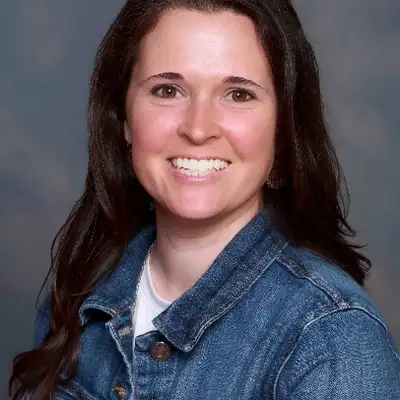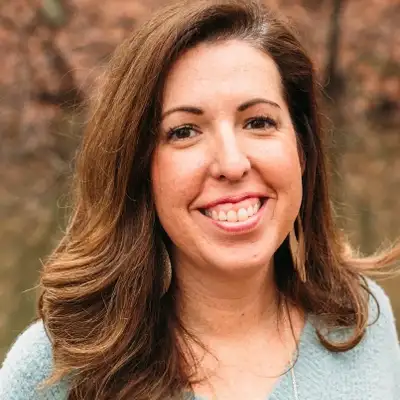
NATHAN: Our guest today is Abby Mandella. Abby joined Wellspring in 2010 and as the executive director she manages the strategic objectives of the ministry through working closely with the founder Larry Bolden and also the board to develop as well as implement Wellspring's vision for creating a wholehearted community. My co-host for this episode is Mandi Wellington, a long-time staff member of the Wellspring Group.
Mandi and Abby, welcome to the Wholehearted Way podcast.
MANDY: Thank you, Nathan. Excited to be here.
ABBY: Thank you. This is very exciting to be invited to participate with you.
NATHAN: It's good to have you here. And I guess my first question, Abby, is you've worked at Wellspring for 15 plus years and you've told me along the way that you'd bet 95% of the people in your life have actually no idea what you really do. And this book, Becoming Wholehearted, that's released soon, is supposed to change that. So let's start there. What has been so hard to explain to the people in your life?
ABBY: Oh my goodness. It's funny that you even ask that because the 5% that do know probably live with me or are related to me. And even they only know halfway what I do. My kids still ask me, what is it that you do? They asked me yesterday if I was an evangelist. So clearly I'm not weighing this out well.
NATHAN: Oh yes.
ABBY: Among other things, I am an evangelist. Yes. It's wild.
NATHAN: It is wild.
ABBY: We've known as an organization that everyone's experience as they engage with us in a pathway for wholehearted living, they have their own unique experiences. So it's hard to describe clearly what it is we do. Yes, we are a discipleship ministry. We specialize in spiritual formation. We offer events and a pathway for connecting to your heart, God's heart, and the hearts of others. And we do this all in community. But when you say it that way, it doesn't always translate into how is this a full-time job? What does that mean to be the executive director? So there are two parts. There's one of what we offer, which is the wholehearted pathway, which in the vision to wholehearted community.
This book takes that journey and lays it out in a way that is understandable. It identifies for people, not just what we were created for biblically, connects to the vision that Wellspring has of equipping men and women to connect to their heart, God's heart, and the hearts of others. But it begins to show you what caused this disconnect between what we were created for and how we live in a day-to-day life. So I feel like it takes some pretty broad, big concepts that we teach in our pathway and it brings it into a book that I can hand out and I can say, this is what we do.
MANDY: Go ahead. I was just going to connect with the reality of how people respond to this explanation and what it really means to connect with your own heart, God's heart, and the heart of others. And what does it actually mean? But what I do find really resonates with people is when you get to the place where you start talking about the disconnect between, I've got these rational thoughts and I've got these emotions and all this is happening, but then I'm in a situation and I'm living a different way than how I want to think or how I want to feel. And so all of those pieces are challenging to wrap your mind around. But one thing I do find that people lock in on is they can really grasp that how I want to live and how I actually live — those are sometimes in conflict with one another.
NATHAN: I've gone to the Battle for the Heart retreat several times. I've been through the follow-through process several times, and I can relate to the challenge that you shared initially — that explaining to people what this is is challenging. And as I heard you talk, I was thinking in my head about a recent vacation last year. My family and I, we went to the Yucatan Peninsula in Mexico. And you go down there and you have this dynamic experience in many different ways. You had these food experiences. You had this experience with a particular tour guide at a ruin. You had this experience in the ocean. You had different smells and weather patterns and all of these things that bubbled up. And you come back and somebody says to you, how was Mexico? And you don't even know where to begin. You don't even know how to say it. And if someone who hasn't been there wanted to know and you handed them a guidebook of the Yucatan, it wouldn't give it a perfect description, but it would show you enough that you'd have more clarity. And I'm wondering if that's what this process of seeing a book is like — being able to help people see the disconnect that they have in their heart and then the ways that we're intended to connect in those three ways that you described.
ABBY: Yes, absolutely. That's a great illustration, Nathan, because until you know what you don't know, you don't know what you need or what you're trying to pursue in understanding and growth. But I think there's just this inherent place that we encounter as believers, whether it might be younger in our adult years or older in our adult years, depending on our story, but realizing that there's a disconnect or the formula is not working anymore. And so this is really just giving a language and an understanding to — that's normal, that's understandable — because really, unless you encounter God in this way, it's not always that easy to identify why this feels different.
NATHAN: Yeah. You sit in a seat where you are managing every aspect of the ministry — from the operational day-to-day detail to the experience that people have on retreats. You're not doing this all yourself. You have a very capable team that's around you. But you have a unique perspective on this because ultimately you are at the helm, responsible for developing and implementing this vision for the ministry. And in that sense, I'm curious what you think this book does for the ministry. How does it advance the ministry's goals?
ABBY: It's not just the book. It's even just being on this podcast. I was thinking about this last night in preparation for this interview. I couldn't be more excited in both directions. One, launching a podcast and beginning to be present out in the big world in such a way that is accessible. But that's the same thing that the book does. It gives us a presence and a placement of content that informs people, invites people. It opens up the door of accessibility to what we've poured our heart and souls into for the last 23 years.
So another thing that's so exciting about the book to me — which I'm going to fangirl it for just a minute — is that it's coming March 17.
NATHAN: Is that a signed edition or did you get just the regular one?
ABBY: This is what I call a bootleg edition. It says specifically not for resale. Yes, it actually showed up at my door and I was so excited. I do have a signed advanced reader's copy that is safely protected somewhere, because some people will know that this book has been 12 years in the making. And when I say 12 years in the making, it has been a painful 12 years of development — most significantly the last four years. So I am thrilled for what this means for the ministry. It really is a milestone.
It's like an Ebenezer of saying, this is the offering. This is monumental — many years of work, lots of prayer, much sacrifice, and hearts poured into a project. And then I feel like we're launching — I would say a baby, but relatively it's like a teenager into the world.
MANDY: I'm really loving hearing your excitement, Abby, about this and the idea of the launch. And you are just like proud of this moment — that's what it feels like to me.
ABBY: There are not a lot of moments that I get to be super excited and fangirl because if my hand's in something, I tend to hold back on it. But with both the podcast and this book, I really am just a supporter. I get to be a cheerleader. And so I feel really honored just to be in this conversation right now.
NATHAN: What's it like to not have to own something that's so helpful to the ministry, like writing the book? You don't have to write the book as the executive director. You get to use your words, be a fangirl of it. And you said you don't have to create the podcast. You get to be an advocate for the podcast and not own it. How does that feel to have those initiatives out there, particularly the book?
ABBY: Nathan, it touches exactly what our vision is — to be part of igniting a movement of wholehearted community. And we believe that the life that we were created for, that transformation happens in community. And part of that, we are equipping men and women to reproduce, to replicate wholehearted community in their area of influence. So for people on our team to be developing things outside of me, outside of even our founder, it's the satisfaction of living that vision — of it being reproduced, being replicated in ways that are not dependent on one person, but it really is just an outflowing of their heart. So it's satisfying, it's fulfilling. And I guess I'm really grateful because neither one of those are my areas of expertise. So to be operating and living and working in a way of community where we're living out what we teach and we're each bringing our contribution — it's just what we're made for.
NATHAN: And you say that's not your area of expertise — like writing a book. Is that what you're saying, or do you mean something else?
ABBY: Yeah, writing a book or creating a podcast — there are a lot of areas. My area of expertise is accounting. So this is really a confusing thing that I'm in ministry at all.
NATHAN: Yeah, that's interesting. You've shared before with me and with Mandi that you consider yourself an introvert. Do I remember that correctly?
ABBY: Yes.
NATHAN: And an accountant. But I've sat in a room at a retreat where you were teaching. So that's a different perspective, maybe a contradictory perspective. Say more about community. If you're introverted and you're drawn to activities or skills like accounting, what makes it meaningful for you to take on a role like teaching, and what's hard about teaching?
ABBY: I don't know what we're going to uncover here, but I think the truth of it is that I entered Wellspring Group in 2010 somewhat accidentally, just in a season of trying to bridge in my career and feeling like the Lord had called me into this. I had no idea that the Lord was going to hijack my life plans, but he did. Yes, I am an introvert. When I actually interviewed with Wellspring Group, there were a couple of things that I said, I'll do anything except this. Those things are the things that are the highest responsibilities in my position now. My whole journey has been a stretch of 15 years, but really what happened is the Lord — through my experience in the Battle for the Heart, which is our primary offering — began to show me the ways that I was disconnected from his purpose and his plan for my life and ways that I was protecting myself.
An introversion and isolation was my mode of operation, but he was inviting me into more. As I began to experience his love and his pursuit in a deeper way, it opened my heart and myself up to connecting and staying engaged in community, getting really in touch with what his call was on my life. It has gradually, but in major ways, moved me into obedience and into surrender of things that he's calling me into — not just the things that feel safe, secure, and guarded or protected, which I would say accounting, isolation, and introversion felt all of those things.
To your question about teaching — teaching puts me in a position that feels more exposed. Also, I'm usually in a room that has 50 to 100 people. And in teaching, I'm sharing story of my own life, which is often pretty vulnerable, pretty risky. I would say who I am 15 years into this journey is drastically different than who I was when I began in 2010.
NATHAN: If you're drawn towards accounting because that's more comfortable, what is it that draws you out of accounting into something uncomfortable?
ABBY: A vision, really. A vision of what God is doing through Wellspring. A vision of what people I love can be when I play my part in their life. A vision of the hearts and lives of men and women that we engage with. It's like another way that I get to be a cheerleader. I get to say, there's so much more. There's so much more. Let us share with you. Let us be a part. Let us walk with you.
MANDY: It's so interesting that you say that, Abby, because I was over here thinking about my experiences through our retreat process, the battle process that you mentioned, and your presence at the retreats that I've been to. Your presence is such a calming one, but the word that kept coming to mind was advocate. I feel like when you come out and you show up — come out of that place of isolation where it might be safer — and you take the risk and you show up, how I've been called out, how much I've felt your presence, but also your engagement, the way that you step in, has called me to more. In places where I felt unsure in my footing or I was insecure about something and I wasn't quite sure the way forward, I very much value and I'm experiencing a lot of that propelling me forward.
ABBY: Wow. Thanks for sharing that, Mandi. I think one of the things I say in all of our events is I've been right where you are. That's because I came to work with Wellspring and I had never encountered the Battle for the Heart. I'd never gone to it. I had my first of everything. I had my second of everything. I've been on this journey. I just might be a step ahead.
Years ago, I used to lead worship prior to even career. In that, I always felt like it was such an honor and a gift to lead people into an encounter with the Lord. I always felt there was the privilege and responsibility of — I couldn't ask anyone to go where I wasn't willing to go. That's what I feel like when I'm at events, when I'm teaching, when I'm writing, when I'm communicating. I'm not asking you to go anywhere that I haven't been willing to go myself.
I know it's scary. I know it's hard. I know that the path that we're inviting you into requires a lot of work. It's not just work in the Word. It's not just work in your team. It's work in your story. I have a lot of support in my process. I just want people to know that I'm there with them. I often say at the events, I'll hold your hand. There's only so far I can hold your hand. But for that weekend, if you need a hug, if you need a squeeze, if you need someone to just say this is worth it — that's what I feel like my part is.
NATHAN: Mandi, when you were sharing back to Abby about how you've been impacted by her, it seemed like it really struck an emotional chord in you as you were sharing that. Say more about what that meant for you to have that example or that influence from Abby.
MANDY: Yeah. Thanks for the invitation for that. I think I was really connecting to what you named right here, the last thing that you named, Abby — that the willingness to hold someone's hand and that you don't ask people to go where you haven't already been. So when you speak, there's an authenticity to it. There's something very real.
And so for me, I get really turned off by platitudes and things like, oh, this is what we need to do, when there may be a lack of integrity there. And so I think that did touch something in me in terms of the word that's come to mind is security. There was a restfulness, Abby, in the way that you invite people into this because of the way you do it so authentically. And so I'm touching both the what that gave me as a participant — that security — and I'm also touching a lot of gratitude because of the fruit that it's produced in my life, not just in my life, but then the trickle down effect to my kids and to my husband, to my world here in a little part of Georgia. So yeah, a lot of gratitude.
NATHAN: Thanks for sharing that, Mandi. And I'm connecting this back to the book. The book conveys a lot of the concepts and ideas that are taught at Wellspring Retreats. Abby, how would you describe for someone who doesn't have any experience some of this fruit that Mandi has referred to that they might learn about in the book?
ABBY: So if you think back at our history as an organization, our primary offering has been a one-year process called the Battle for the Heart that consisted of two events — two catalytic events — and a follow-through process after each event. So you go to a retreat for multiple days, and then you're in a small group meeting once a week for a period of time. And then you go to a second retreat. And then following that, you have another 12 weeks of small groups. So the way that flows is a year-long commitment and it's an intensive, really, for a year. And we've experienced and we've seen men and women's lives change through this process, but it's a big ask. It's a big commitment and it's hard to fully explain what you're going into, but it's really valuable. And there's a tremendous amount of transformation.
What the book has done is it's taken a 30,000-foot view of those concepts and broken it down to say, these are the pieces of the larger story. We were created to reveal God's heart and to glorify him on the earth. There's an enemy that has come to steal, kill, and destroy. And the way that he does that is to disconnect us from that purpose for which we were created. Disconnect us from our own heart, disconnect us from God's heart. And in that, to disconnect us from revealing God's glory to those around us.
It uses stories to help tell the story. So if you read the book, you will see a little bit of my story in there — and that's humbling. It's also exposing. It's also scary because there are pieces out there that I'm having to trust the Lord with, that part of my heart and story in the book. But it's not just mine. There are other stories throughout this book of lives that have been changed through the transforming work of God. And it's so exciting — whether you can relate to my story or whether you relate to Bob Flahart, who's a founding pastor of a church in Birmingham, Alabama. I don't know where you might connect, but there's so much in here that's taking biblical concepts, biblical truth, laying it out in a way that you have these light bulb moments. Connecting biblical truths and earthly realities in the way that the enemy has sought to disconnect us or to distort our purpose and the call in our lives. And then it's giving you story that says, this is how men and women are walking through this. And this is how their lives are being changed. So it's really a high-level view, anchored in truth, connected to stories that gives you a picture of where you can go.
NATHAN: That's very concisely put. For you, you talked about using self-protection, and you gave an example of people essentially experiencing an external force that is a disconnecting force. And so I wonder, as you go through — you're around this ministry, you're around this language all the time — how do you prevent or counteract the disconnection that so many people like the uninitiated have experienced, and what certainly must bubble up in your own life from time to time?
ABBY: I'm a reflective thinker. So I tend to think a lot before I speak or act. That can be good. That can also be bad. But one of the benefits of that is when I'm faced with a choice of how I want to move forward in any situation, I often can just consider: what kind of woman do I want to be here? What does it look like to reveal God's heart? And so those might be the two lenses that are prioritized in how I move forward. And so when you have the vision and experience of the body of Christ as community — and what we each offer and bring, being a fuller picture of who God is — it makes me more aware and intentional that what I have to offer matters.
How I show up here matters. What I say now matters. My voice has value in the lives of the people that God has placed me with. So that helps me to move into things that don't feel as comfortable, that aren't as safe. As an introvert, I can tend to say I want to stay in a small bubble of people that I'm comfortable with. But when I consider that the purpose for which I was created was to reveal God's glory to others, if I'm just isolating or staying in a small circle instead of being open to whatever God may want to do that day with someone in the checkout line, then I'm limiting their experience of God. Not because I control God's glory, but just because there may be something he wants to convey. And so that's really where my motivation comes from — I just want to be all God wants me to be, sensitive to what he's doing, and show up and play the part he's given me.
NATHAN: How does community help with that? Like your own community that you belong to — how does that add to reading the Bible, spending time in the Word, praying? Does it take you closer to being able to show up how God wants you to show up? Or is it that you're already able to do it and it's just a nice comfort to have? What is the role of community there?
ABBY: I don't think I would be the woman I am today without community. The community — I have multiple layers of it. You could start with my family, then I would say the next closest community actually is in my Wellspring community with staff and board and alumni. But what the role it plays is that they encourage me. They give me courage. They give me support. They speak into my life. They challenge distortions. They call out things that are good. They affirm that my voice and what I bring, and they help me to see what I can't see in myself.
And so I think it's all a part of when everybody's doing what God's called them to do, then it multiplies. It draws courage out of others. It speaks truth, challenges distortions. Truthfully, the community that I live and work with — they probably call out things that are challenging as much as calling out things that are positive. And that's really just an invitation into growth.
NATHAN: And is that challenge — is that what makes it attractive to you to maybe hold some of those things back? I mean, you've referenced that you're comfortable being alone, not being on stage, not putting things out there. Is it the risk of the challenge from community?
ABBY: No, I hate challenges. I wouldn't say it's the risk of the challenge. It's the hope of the impact.
NATHAN: So impact is larger than your preference to stay away from the challenges.
MANDY: Abby, that brings up a question for me. What was a catalyst for seeing the impact as bigger, as stronger than the negative or the challenge or the risk?
ABBY: I think being in places where I experienced people connecting dots with the Lord — connecting places in their lives where their belief system or the way that they were making life work, and realizing, oh, that's not all God has for me, or that this is a pattern that is destructive or sabotaging what I really want. When you start to see that awareness and understanding connect, and then the way the Lord meets them in those places, bringing healing or bringing perspective of what could be — when you experience that in people's lives and in community, that's what makes you realize this is worth it. That's what you feel. There's this satisfaction of, oh my gosh, there's so much more that God has for us and together we can get there. I hope. I know we don't get there until heaven, but it's all a journey of sanctification.
MANDY: I love that, Abby. It's like a little taste. You are tasting a bit of heaven. You are tasting a bit of that eternal something — just the kingdom. I love that.
I'm really aware — I feel really selfish in this moment. I'm like, oh, what it is that's motivating for you is so other-centered. What's motivating for me in terms of being willing to take the risk is the wholeness that it produces in me. Therefore, when I'm operating from more of a whole place, what I would say is when I'm disconnected, usually one or some part of me is oozing. You feel like you're in a painful spot. You want to shut that part off and you're operating from the remaining portion. When I'm operating from wholeness, I really do experience what that gives my family and gives those in my community. I would say the first was the recognition of the wholeness in me. That produced so much motivation for me.
I'm listening to you be other-centered and what's motivating for you. That's actually an example of community right here in real time, because I'm feeling motivated and challenged in a positive way to see outside my own self as a motivator and what that's producing in my community and the fruit that it can bear.
I'm currently in real time being challenged by you, Abby, by just how you're different and you're being honest in your story. I find myself curious about something new.
ABBY: Thank you. That really gives me more courage to keep going because I think — embarrassingly — I would say I was so comfortable in where I was personally that it really took me seeing what it was costing outside of my life to not be who God created me to be. I think I was so shut down and I was so out of touch with what wasn't whole in my life because it was comfortable and it was safe. When I got in touch with specific parts of my life and relationships that I knew I had not come through, I was not being the friend, the sister, the wife that I could be. That's when I really realized, okay, this sense of safety and self-preservation is actually sabotaging what I really want others to know and to experience from the Lord.
NATHAN: It's beautiful. I really like Mandi's example that she shared — drawing inspiration from you as you were talking about things. It's easy to lose sight of the impact we have on other people when we share our own struggles from a vulnerable place, as you were sharing there, Abby.
A common trait in modern American life is, oh, Mandi's struggling — Mandi, here are the five ways you can improve your life. I'm just going to give you some advice. We really feel comfortable there. It's horrifying to us to think of revealing the ways that we struggled and not being able to know what Mandi takes from that. One, it's horrifying because we're showing ourselves as weak when we worry about how we will be perceived if we're weak. Then two, I can't know what Mandi takes from what I share. I can't know if it's valuable. I think I can control it more if I can just tell Mandi what to go and do.
I try to be mindful of that, having encountered it so many times. And it's easy to forget, but when I'm in a position where I'm leading other people and I'm not sure what to do and I'm grappling with fear or worry, simply by showing up and saying, I think we need to go this way and we have some concerns, but we're going to commit and we're going to go this way — you don't think about it, but the people around you who are watching you, they're also going to be emboldened by seeing your honest conviction and willingness to commit to a path.
It's a special duty of leadership and you are in an important role as leader of the organization to be modeling that on a daily basis.
ABBY: It's funny you say that just because it does feel vulnerable to lead because people are trusting and people are following. But I think there's also a weight in being vulnerable and owning not just weaknesses, but owning what you don't know, owning the uncertainty, owning where your heart is in it and just saying, I don't know all the way, but let's do this together — and realizing that God's responsible for the outcome. I'm just responsible for obedience. My primary job is obedience, walking in the way that the Lord's leading. The outcome is up to him. And so it really is humbling when I consider it with our team — just how willing they are to walk alongside me, to speak into my life, to bring their voice and their experiences and expertise. It says something that they're willing to do that when you're in a position of authority.
That says something very significant. We have a joke because as an Enneagram 6, I've lived most of my life predicting how we'll die. And so a lot of times I'm always like, I can see danger and be like, oh, is this how we die? Is this how we die? And so I've really in the last two years gotten a lot of freedom from that. And really the Lord has moved me into a perspective of this isn't how you die. This is how you live. This is how we're going to live. Follow me to fullness of life. And so it's really just been the shift in my life — which I hope has overflowed into leadership — of really just taking the territory that the Lord's calling us into.
NATHAN: So Becoming Wholehearted, the book, comes out March 17th, 2026. And you're leading an organization that has produced the body of work that went into the book as well as its retreats. Can you say some specific hopes that you'd like to see emerge from this entire process?
ABBY: Oh, wow. This is not a marketing plug — I don't actually know our specific hopes. So anything that I say is off the cuff. But I really hope that it reaches hands of men and women who have found themselves in this place of saying, something's not working. And I feel like for myself, as a numbers girl, I think part of why I like numbers is because everything adds up. It's consistent. There's formulas and you're going to get a result. And in life, that is not what happened. It just isn't. It doesn't all add up. And you can do this and you might not have the same outcome because it's a broken world.
And so I think there are places I anticipate that all people encounter of the formula isn't working. And I hope that when they come to that realization, or if they're already wrestling with that and questioning, okay God, why is this not adding up? — that somehow the Spirit drops this book in their lap and gives some perspective of, wow, I'm not different. I'm not messed up. This is a reality that we live in. And then they're inspired to connect with others and go through this and consider what the Lord might be calling them into that's greater.
And fortunately, because we have been doing this for 23 years now, we have a pathway to offer. And so my dreamest of dreams, if that's even a thing, is that they move into greater experiences. That you start with the book, it opens your eyes, connect with this podcast, start to encounter the community that we speak of that's living this way, connected to God's heart. And then go further into small group studies and maybe — just maybe — come to the Battle and I'll hold your hand.
NATHAN: That's awesome. That's well said. I think that is a very compelling vision for the ministry and I am right there with you in the hope that it has that impact.
ABBY: Yeah, I'm excited. And on the other side of it, I am very close to the two authors. Larry Bolden is our founder. I've worked with him obviously for 15 years, but known him longer than that. And then Aneesa Sumler is my sister. And so I really feel like this is a relative coming out that we're offering out into the world. And so my hope for them is that they experience the deep satisfaction and just the fullness of all that they hope that this book would be. Because they've really sown so much into it. It has been a labor of love. There's been a lot of tears. There's been a lot of resistance just in the spiritual realm, because I really don't think the enemy wants this out there.
And you might want to edit that — I don't know — because it just has been such a big thing that I really hope for them and for our team who's walked alongside of them for all these years that we see the fullness, that we see the goodness of God through this.
NATHAN: Yeah, that's awesome. We'll talk to Aneesa and Larry in a future conversation about their experience and the challenges that they had in putting all of this together. But for you to see them suffer through it, follow through on it, and turn it into — it sounds like an act of obedience to bring it to fruition. That's a pretty powerful statement.
ABBY: Yeah, just the vulnerability of laying their hearts out there and the stories that are in it. Every story that's in it with someone willing to open their heart so that someone else might see and connect to the goodness of God.
NATHAN: I love that so much. I feel like it's a product of 20-plus years of faithfulness to something that God was revealing and showing, and these choices to walk into hard paths. And it's a fruit of that labor. It's a really sweet thing.
ABBY: Yeah. I think that's why we're so excited. And it's all in God's hands. It's the way of humility. We walk, we offer, and what the Lord does with it is in his hands. I feel like we get that comment a lot from people when they engage with this material. So I just feel a lot of satisfaction and hope — desire for people to receive that, to taste new parts of him that they didn't know were there.
NATHAN: If someone wants to get their hands on the book, where should they go?
ABBY: Yes. If you visit our site at becomingwholehearted.org, that will give you the opportunity to purchase. You can pre-order, or if this is already live after March 17th, you can order through us. We are also on Amazon. On our site though, becomingwholehearted.org, you will find other resources that accompany the book. We have some resources that are available for download, as well as a small group study guide, because we actually recommend you do this in community. We believe transformation happens in community. So if you buy the book, share the book, go through the book — doing a small group study guide to help unpack some of what we've touched on.
NATHAN: Awesome. Abby, thank you so much for making time to be on the Wholehearted Way podcast. It was a delight.
ABBY: Such a privilege. Thanks for letting me be in the beginning of it.
NATHAN: Yeah, you're very welcome. We're honored to have you. And Mandi, thank you so much for co-hosting this conversation with me.
MANDY: That was fun. Thanks, Nathan.
NATHAN: If you'd like to learn more about our podcast, you can subscribe on YouTube or in your favorite podcast player. And you can find out more at the Wellspring website, which is wellspringgroup.org. Thank you for listening or watching.