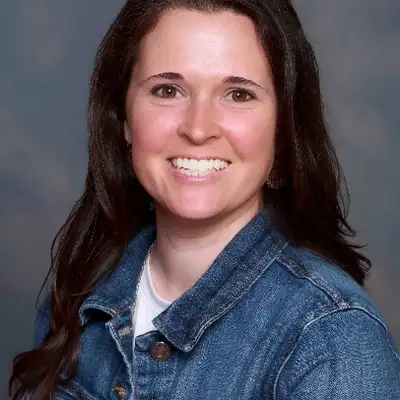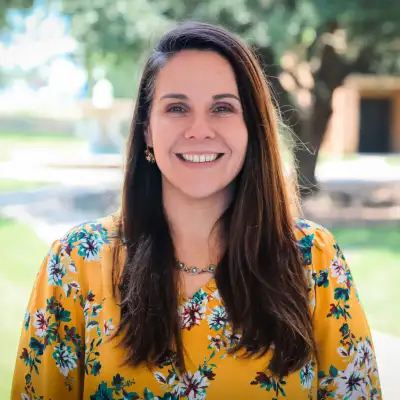
Nathan King: Welcome to the Wholehearted Way podcast, brought to you by the Wellspring Group. I'm Nathan King, co-host for today's episode and facilitator for the Wellspring Group. Our guest today is Pastor Bobbi Lassiter. Bobbi is an Associate Pastor at Covenant Methodist Church in Dothan, Alabama. In her role, she was involved in introducing the Wholehearted Living Discipleship Program to her church and has preached and taught on the topic of living with a whole heart. Co-hosting our conversation is Mandi Wellington, operations manager for the Wellspring Group. Bobbi and Mandi, welcome.
Mandi Wellington: Thanks so much, Nathan.
Bobbi Lassiter: Hello.
Mandi Wellington: Bobbi, I'm so excited that you're here today. I love the position that you hold at your church. I know a number of your leadership has been using the Wholehearted series and some of the other tools that Wellspring puts out, including the Battle process. And so both your leadership and some people in your congregation have been intentionally moving toward this pathway. I was just curious about what's given you the confidence to invite people into this pathway.
Bobbi Lassiter: I think the number one thing of making the decision to create that invitation for our entire church was that we started small with our staff, after me visiting a Battle for myself and after having some amazing men invite me to experience it with them. I realized that it was something that God had been laying on my heart for many years and had created a new way for me to invite others into what I had already been involved in for myself. But yes, so what I've already been involved in for my own personal self, that I was finally like, "Oh my God, there is a legit pathway for me to now invite not just leadership, not just staff, but the congregation too." And when I saw that my staff, hesitantly our first little group that I created of some of our women, say yes to it and watched how God moved in them throughout those weeks of doing Wholehearted Living together, I realized that God was up to something huge and that it was really a change of the entire culture of my staff from that one little moment. And so it gave me a bigger, bold invitation placed in front of me to say, if it can change the culture of my staff, what else can it do for our entire church? But it was also God reminding me, like, little step by little step—mustard seed faith-type movements so that He can really create those roots that need to be created and grow them as deep as possible for it to actually become an entire culture.
Nathan King: That sounds like a really intentional way to approach this. I've been involved in introducing programs like the Wellspring Wholehearted Living and Battle for the Heart to other people, and they're different because we're not talking about just reading a book or a discipleship program where we just study Scripture. All of those things are really good, but you're telling people that we're going to explore vulnerability and different ways of describing that process, and it kind of throws people for a loop a little bit and they feel a little concerned about it. So you had to have some sort of crossing of the threshold personally to get comfortable with that. What was it that you experienced in yourself that made you intrigued?
Bobbi Lassiter: So, backstory: for several years, I've been doing this process in a few different ways, not Wellspring itself. And I was first introduced to pretty much the foundation of what Wellspring is about when I was going through ordination stuff for my prior denomination. And we had to do a certain type of training that began to make us look at what are our lies that were created within our lives, and how it can show up in our responses, how it can show up in our ministry, and then learning how to capture it and rewrite it so that we're not trying to heal ourselves as we are encountering other people in their own lies. And that wrecked me. It's called Clinical Pastoral Education class that we had to take, and it was harsh and it wasn't a loving environment. But what it taught me brought me about on this pathway that said I'm a different person now because I understand these parts about myself that I wasn't aware of. But then my heart goes, "There's gotta be a better way. There's gotta be a more loving and kind way for others to experience this because it was so transformative for me." And then I got asked to step into another pathway that has the same foundation of faith-walking. And when I described it to Larry [Bolden] maybe last year or the year before, he was like, "They had had to have gone to Wellspring at some point." But it's called Faithwalking, and it's another institution or group that does a lot of the exact same things that Wellspring does. We did all over Zoom because it was COVID, and also because we were all over the place. But we did pretty much the exact same thing you do in Wholehearted Living, Wholehearted Community, all that stuff. But my brain kept going to, "I love this, but I need something more." And I got into this kick that I was like, "I need leadership to hear me that if we could create a rhythm of a retreat and then do these things that we're doing—the teachings, and we had a coach and we were learning about our lives and learning about capturing them, rewriting them, and how we show up, and how we can have different language and the feelings and all that stuff—but then we need to have another retreat in the middle of it. And then we come back and we don't get left alone and we still go through this together," because that one's a three-year process. And then I get to Covenant, and Mike Woddum's like, "Hey, I'm involved in this thing called Wellspring. And I think you have the same heart that I have. I would love for you to just come and sit and experience a retreat and then tell me your thoughts." And I get there and I was like, "Okay, God. This is exactly what was been placed on my heart for the past five to seven years." And I even told Larry, I was like, "I had dreams and visions of this." And here you're doing it. And so it just solidified that what I had been thinking about, dreaming about, visioning was that it really was God, it wasn't me. And that was the coolest part.
Nathan King: Amazing to hear that you had these pieces come together from various sources and then encountered it at your current church. One of the things I wanted to go back to is you mentioned lies. For someone listening to this who doesn't have exposure to these types of programs, when you say getting into these lies that you tell yourself, what would be an example—maybe something you've experienced or that you've seen other people struggle with in terms of a lie?
Bobbi Lassiter: The very first lie that I came to understanding that I have that has lived within me since I was a middle schooler... so having those profound moments in our life, mine are always in the childhood for the most part. But to have those moments of your body, your mind, your soul creates a survival technique, a survival statement for you to be able to live through it. And 90% of the time in my life, it is a full-on false statement of who I am. And then I unknowingly live into it for almost my entire life until I was about 40—I'm about to be 44 next week. And mine is "I'm not enough." That was the very first one that I believed since I was a middle schooler. I was a kid that was overweight, struggled with my weight for very long time. And I got loud and obnoxious and I sought approval and love in all the wrong areas because I just believed I wasn't enough. And so it lived through me in every single aspect of my life, big time in my ministry. I would never trust that I could be given the opportunity to step into something because I'm not enough. I don't have the resources, I don't have the capability, I don't have X, Y, and Z to be able to answer that portion of the call. And it really stunted me for so long.
Nathan King: That’s very vulnerable of you to share that you walk around with this belief and that you could point to being in middle school as where it started. So it's not only a lie, but it's a secret lie. You don't want to share it because it's so vulnerable. I say that from my own experience thinking about the lies that I believe—which I relate to—of coming to "I have to earn," I have to do something for someone to know that I'm valid as a human. And that's really hard to bring up. So you encountered that in a "not-loving environment" where you learned about that?
Bobbi Lassiter: Yeah, the environment was Clinical Pastoral Education, and we have always joked around with other pastors that have walked through it that your day is not finished or your instructor will not let you go until someone cries. And it's literally because they want you to remeet those traumatic moments. And it was hard.
Nathan King: What was missing from that? You started to cobble it together from different sources and then found that the Wellspring programs offered it. What was missing that made it not loving?
Bobbi Lassiter: I would say probably community. Like actual legit community, not just a group that you're forced to be in. True vulnerability, not forced vulnerability. And then knowing that you are not let go. Knowing that you always have people that are, in the way that Wellspring says, fellowship around you that are fighting for you. That's why I was so adamant about—because Faithwalking is phenomenal and I absolutely love that it began to really allow me to dig deeper in a safe place—but I missed that component of community. I loved these people dearly but we were too far away to be able to ever get together. Zoom's great for certain things, but I needed local. I needed someone that was living everyday life with me and then someone that I can stow away time with, where we have those intense moments together where we are focusing just solely on all of this stuff rather than having the distractions of everyday life.
Nathan King: What do you think makes community like that so important to vulnerability?
Bobbi Lassiter: Trust. I mean, the building of trust. And that's what was missing with CPE, was that it was a forced thing and it was a "I'm going to keep coming at you until it comes out of you." And I pushed back, and the reason why it was really super hard for me is that I pushed back and I wouldn't engage because I'm a stubborn person. I was like, "I'm not telling you any of this. I don't know you." And she would not allow that. And I'm thankful that she didn't because she had my number and she knew that she had to push me for that setting. But there was no trust. And so that's the thing where I've seen it blossom in our staff and in our church is that we have been super intentional on how to put these different groups together and who to put in which group. Because you've got to realize that there are landmines in relationships you don't know about, but if you do know about them, you don't put them in the same group. It's hard enough to gain trust when you're not used to being vulnerable with anyone.
Mandi Wellington: What do you think gave people the courage to begin to trust?
Bobbi Lassiter: I think if you would have asked my first group, it's that I was willing to be vulnerable with them in the process. I think the tides turned when I started sharing different parts of my story.
Mandi Wellington: As a pastor, as a leader, you are entering into this conversation in a vulnerable way.
Bobbi Lassiter: Yeah, and that took a hot minute for my first group to really be okay with and trust. Because here I was, and we laid it on the table. My first group was some of my staff ladies—I don't see myself as their boss but they see me as their boss, as the pastor. And we had to lay it on the table. That I understand I'm asking you to come into this space and technically the dynamics are a weird set of dynamics because I am the supervisor of one of you and I am the pastor of all of you. And we just have to place it there and say we are aware of it, we recognize it, we acknowledge it, but then I told them I was like, "But I am coming to you as another person along this journey with you. And whatever you say here stays here, and it doesn't affect how I see you as a boss—it actually helps me to see them better and helps me to understand them better as a boss." But yeah, it was a weird dynamic that we had to really lay on the table.
Nathan King: And what I heard you say was you were vulnerable first with them. And that's been my experience is that if you're the person in authority and you want vulnerability, it comes by example. Many people in positions of authority think being in authority means I don't have flaws. And if people see that I have flaws they will not respect me. But it's the opposite. And that's what you were able to demonstrate to them.
Mandi Wellington: I'm over here curious to know the fruit. I'm picturing this group of ladies who you're being vulnerable with and it's like setting the table for something. What are the goodies that got to happen because of this vulnerable conversation?
Bobbi Lassiter: Yeah, so we got to break some huge strongholds and some lies that had been living boldly on the surface and then have been hiding underneath the surface. And not just of them, but of the entire staff. It got to create to where there had become an exhaustion of ministry because they had gone through so much, many different hurdles over the past few years, that now there is a "I want to be a team, we are a team, and also is that I want to help you." And then standing in their authority of their position. And then that first group of women, when they started changing, the rest of the staff was like, "Hello, what is going on?" And here's where you talk, Nathan, about mistakes. This is when I had to realize that I had made a mistake of not sharing with the entire staff of what God had been placing in my heart and my mind and why I was starting with this one little group. I didn't do that. And so then I had people watching this one little group change and they're like, "Why aren't you doing that with us?" And I was like, "Oh, Bobbi." And so then I sat with them individually and I was like, "Okay, my bad. Let me talk about what's happening in my heart." And then we started another group, and then my colleague Nick, he did it with a guys' group. And then now we have congregation members that are leading a couple other different groups. But it was that mistake was like, "Oh, okay." And the fact that I did acknowledge it, they were like, "Oh, well thank you for saying that." It was totally my bad.
Mandi Wellington: I'm curious to know, going back to your comments about the lies earlier, maybe the lie that "I'm not enough," it seems like there was some motivation for starting out small, like there was something holding you back in that moment.
Bobbi Lassiter: Yeah, so two things. One is that we started off small because I sat with Larry at that first retreat and I was like, "Here's my goal. But I feel like if I'm going to get my congregation to completely change their culture, and if my staff has never been involved in it and experienced it for themselves, we're going to beat our heads up against the wall." And Larry confirmed, "Yes, start small, start with your staff, and then go from there." The other was that—and I love that you said "at the table" because that's my second lie. Is that I believed because I'm not enough, because I'm a woman, I don't belong—I don't have a seat at the table. And so that has always made me hesitant when I have these moments of knowing strongly of what God is trying to do. Because for so long, when I've come to leadership and been like, "I think this is what God is calling us to do," it was met with "Well, you know, umm..." And so it was I need to see if it works. I need to see if I'm crazy or not. I need to see if this is something viable. Because I didn't fully trust myself. In that lie did not come out until the second Battle for Your Heart that I went to with the guys. And Joel Boyd and Mike Woddum both looked at me and go, "Do you realize that you are sitting at a table of all men, and they're the ones that have invited you into this space multiple times, and your lie says that you don't belong at the table because you're a woman?" And they just, you know, in that very kind and loving manner, laughed and they were like, "Are you kidding me right now?" But yeah, that is a big part of treading very lightly, knowing one we needed to start with our staff, but then also still second-guessing whether or not I was really hearing what the Lord was saying or in hindsight was that whether or not I was trusting that God could use me in this way.
Mandi Wellington: I can really relate to the hesitating and holding back and tiptoeing in versus stepping fully in. I'm really thankful for your courage to move. I'm really thankful for your ladies that responded in vulnerability. I feel like there's this drawing out of isolation into community where people are tasting rich and full things. And I just think everybody—that's really what our hearts long for.
Bobbi Lassiter: Very much so. And that's the, I think that is one of the biggest a-has for almost all the ones that have gone through it since I've been here is how alone they were and how lonely they were. And because they didn't trust community. And that was probably one of the hardest awareness moments that I had is that here I have people that have dedicated their life to helping others step into community that struggled with it for themselves. And so watching them say yes to it and begin to trust in it and to boldly live into it just really gives you all the hope that you could ever need and ever want.
Nathan King: How do you approach people in your congregation or people new to your church to tell them the value of this wholehearted community? How do you define wholehearted and how do you make the case that they should dig into this community?
Bobbi Lassiter: One is I invite them into conversation at the table—either food or coffee. It is not a side-step conversation, it is not a "Hey let me catch you on the back side of Sunday morning" or in passing. It is a full in-depth of explaining how I got here and the change that I've seen in my own life. I give them my spiel of exactly what I just said, and then I say, "You know what, if you want more, go talk to LG, go talk to Meg, go talk to Deandra and let them tell you their experience." I have as a pastor a built-in authority to some people. And I have to be aware that it can't just come from me as a pastor. It's not an order. And it's also that, you know, your pastor tells you this and your pastor tells you that, but if you can point them to everyday people that have experienced this and they can tell you a before and after, that's where you get true—I'm not going to say buy-in, I know that's where my brain wants to go—but they will follow you after that.
Nathan King: What strikes me about that is you're talking about in the context of church leadership, and it's also true possibly even more problematic in outside of church environments. People are telling themselves in the workforce that they must cut out all of these squishy heart aspects of themselves because they're too busy. They don't have time. What you're saying is there's a cost to that.
Bobbi Lassiter: Yeah, I think that is one of the biggest downfalls of our entire society is that we no longer see each other as human beings. And we've created corporate areas of this world that really just don't understand people. And there's a difference between allowing people to take advantage of you and actually your productivity will skyrocket if your people actually believe you know and care about them and that you know them on a personal level. You can still have those boundaries. But if you can't share that with me and me see where I can help come alongside you to help you be who God has called you to be, what am I doing? Because I don't have staff, I have partners in ministry. The problem is that when we see our staff as staff and not partners, and you can only be partners if you really have those vulnerable truthful spaces with each other.
Nathan King: Being able to articulate a feeling does something in a situation. What's your take on what being able to articulate a feeling does in a situation?
Bobbi Lassiter: It brings freedom. It brings freedom to bring it out into the air, to freedom to being able to let go of it and not live in it. Which is really what happens when we don't name them, is that we just live in it and we are lost and we're beginning to wonder why we're blowing up, why we're disconnecting. It's because we don't have the vocabulary. And that feelings wheel did not exist when I was in elementary school. I'm sorry but we never talked about it. And it rocked me when I first learned it. Freedom. It brings freedom in our lives. And there's so many of us that are walking around not living into the freedom that Christ brought to us. And that breaks my heart.
Nathan King: That's so well said, Bobbi, and it's an inspiration to hear you describe your own journey, your personal journey and the way that you have brought your passion to your church and encouraged them to take the risk of getting to know themselves so that they can connect better to God. We really appreciate you taking the time to share your story with us today. Thank you for being a part of our conversation.
Bobbi Lassiter: Thanks for allowing me and inviting me to the table. I appreciate it.
Mandi Wellington: You're welcome. Great conversation, good to have you guys.